Private onsen vs in-room bath vs family bath: what the terms mean
Booking sites use 'private onsen' for several different things, from a cypress tub on your balcony to a lockable bath you share in turns, or a small in-room shower bath with tap water. Knowing the Japanese terms helps you book exactly what you want and avoid disappointment.
What's the difference between a private onsen, an in-room bath and a family bath?
An in-room open-air bath belongs to your room for the whole stay. A family or kashikiri bath is a shared private bath that one group locks for a time slot. 'Private onsen' covers both. In-room baths cost more but give total freedom; kashikiri baths are cheaper and often free.
Updated · How we verify · Open data
Quick comparison of Japanese bath types
| Term | Japanese | Private? | Typical cost | Best for |
|---|---|---|---|---|
| Room with open-air bath | 露天風呂付客室 | Yes, whole stay | Highest room category | Special trips, couples, tattoos |
| Room with indoor bath | 内風呂付客室 / 客室風呂 | Yes, whole stay | Varies | Privacy without a view |
| Kashikiri / family bath | 貸切風呂 / 家族風呂 | Yes, per slot | Free to a few thousand yen | Couples and families on a budget |
| Large shared bath | 大浴場 | No, gender-separated | Included | The classic onsen experience |
| Shared open-air bath | 露天風呂 | No, usually gender-separated | Included | Scenery and fresh air |
| Mixed bath | 混浴 | No, shared by all genders | Included | A rare traditional style |
Rooms with their own open-air bath (rotenburo rooms)
A 露天風呂付客室 is a guest room with an outdoor bath, usually on a balcony, terrace or small garden. It is yours for the whole stay, so you can soak at midnight or at sunrise without booking anything. These rooms are typically the most expensive category at a ryokan, and many properties have only a few of them.
Check the water source
Not every in-room bath uses hot-spring water. Some are filled with natural spring water piped from the source, some use treated or recirculated spring water, and some use ordinary heated water. The room description may say 温泉 (hot spring) or 源泉掛け流し (free-flowing from the source). Our property pages show what each official website states and mark it 'not stated' when it says nothing.
"Some rooms" vs "all rooms"
If an inn has only some rooms with an open-air bath, you must book that specific room type. A smaller number of properties say every room has one, which makes booking simpler. In our listings, these appear as 'All rooms'; see the Hakone list of rooms with an open-air bath for an example.
Kashikiri and family baths
A 貸切風呂 or 家族風呂 is a bath used by one group at a time for a slot, usually 40 to 60 minutes. It might be indoor or open-air, simple or beautifully designed. Many small ryokan include it free; others charge per slot. It is the budget-friendly way for couples and families to bathe together. Our kashikiri guide explains booking systems and fees.
Shared baths: daiyokujo and rotenburo
The 大浴場 (large public bath) and shared 露天風呂 (open-air bath) are the classic onsen. They are almost always separated by gender, often swapped between men and women at set times so both can try each side. You bathe naked with other guests of the same gender. Many inns still restrict tattoos in these baths.
What about konyoku (mixed bathing)?
Mixed baths (混浴) still exist at some rural hot springs, but they are uncommon and sometimes allow bath wraps or towels designed for the purpose. They are not a substitute for a private bath if you want privacy with a partner.
How common each private option is in our data
Across 219 verified properties, 107 sell rooms with their own open-air bath (9 in every room), and 188 have kashikiri baths. 87 mention free-flowing spring water.
| In our verified data | Properties | Examples |
|---|---|---|
| Rooms with open-air bath | 107 | Hakone Kowaki Sono Tenyu, La Vista Kusatsu Hills and Odakyu Hotel Hatsuhana |
| Open-air bath in every room | 9 | Hakone Kowaki Sono Tenyu, La Vista Kusatsu Hills and Odakyu Hotel Hatsuhana |
| Kashikiri baths | 188 | Hakone Kowaki Sono Tenyu, La Vista Kusatsu Hills and Odakyu Hotel Hatsuhana |
| Free-flowing spring water | 87 | Odakyu Hotel Hatsuhana, KAI Sengokuhara and Yubatake Izumi |
Counts from each property's official website, last checked 18 October 2026.
Costs compared: what you pay for privacy
A room with its own open-air bath is usually the top price band at a ryokan, and the premium over a standard room can be large, especially at weekends. A kashikiri bath adds little or nothing to a standard room. Day-use private baths charge per slot. The table below gives a rough sense of the trade-offs; actual prices depend on the property, season and meal plan.
| Option | Privacy | Flexibility | Relative cost |
|---|---|---|---|
| Room with open-air bath | Complete, whole stay | Soak any time | Highest |
| Room with indoor bath | Complete, whole stay | Soak any time, no view | Medium to high |
| Free kashikiri bath | Complete during your slot | Book or wait for a slot | Lowest |
| Paid kashikiri bath | Complete during your slot | Book a slot | Low |
| Shared baths only | None | Within opening hours | Included |
Semi-open-air and view baths
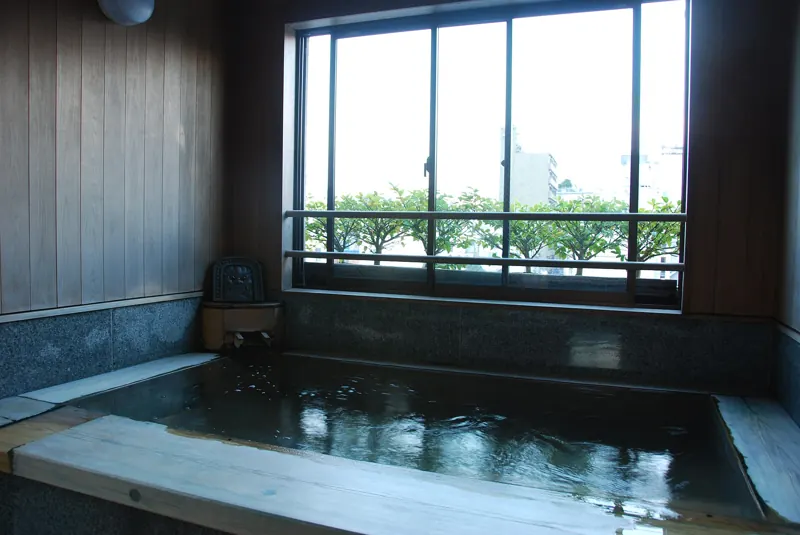
Some rooms have a 半露天風呂 (semi-open-air bath): a tub by a large window or under a roof, open on one side. Others advertise a 'view bath' indoors. They can be lovely, but they are not the same as a full open-air bath, and the water source varies. If the experience matters, check room photos and the water description before booking.
Private baths at onsen hotels
Large onsen hotels may offer both rooms with balcony baths and bookable private baths, sometimes with a fee. Smaller ryokan tend to be more flexible and more often include private baths for free. Our listings record both, so you can filter by what matters to you.
Which private bath type should you choose?
- Celebrating, or want maximum privacy: a room with its own open-air bath.
- Couple or family on a budget: an inn with several free kashikiri baths.
- Tattoos: a room with its own bath is the safest choice; otherwise an inn that states tattoos are fine in private baths. See tattoo-friendly onsen.
- First onsen trip: a private bath lets you learn the routine without an audience, then try the shared baths too.
- Short day trip: a day-use private onsen rents a bath by the hour.
A note on water treatment
Heated, diluted or recirculated water is common and not a sign of poor quality; it is often needed for safety, temperature or hygiene. Free-flowing water is prized by enthusiasts, but a well-run bath with treated water can be just as enjoyable.
Reading booking sites carefully
On international booking sites, 'private bath' can simply mean an ordinary bathroom in your room, not a hot spring. Look for room names that include 'open-air bath', 'rotenburo' or 露天風呂付, and check photos. If the in-room bath is described as a 'view bath' or 'semi-open-air', ask whether it uses hot-spring water.
When you compare prices across Agoda, Trip.com and Booking.com, compare the same room type and the same meal plan, and check whether the bathing tax is included. Our onsen tax guide explains extra charges.
Where to find each type
Resort areas near big cities, such as Hakone, Atami and Arima, have many rooms with open-air baths. Small-inn towns such as Kinosaki, Kusatsu, Yufuin and Kurokawa are strong on kashikiri baths. Browse all onsen towns to compare.
Glossary: Japanese bath words on booking sites
- 温泉 (onsen): natural hot spring; by law the water must meet set temperature or mineral criteria.
- 源泉掛け流し (gensen kakenagashi): spring water flows in from the source and overflows, rather than being recirculated.
- 加温 / 加水 (kaon / kasui): heated / water added, common when the source is too cool or too hot.
- 循環 (junkan): filtered and recirculated water.
- 露天風呂 (rotenburo): open-air bath. 内湯 (uchiyu): indoor bath.
- 貸切 (kashikiri): reserved for one group. 家族風呂 (kazoku-buro): family bath.
- 大浴場 (daiyokujo): large shared bath. 混浴 (konyoku): mixed bath.
With these words you can read most room names and bath descriptions, even on Japanese-only websites, and you will know what to ask when something isn't stated.
Related guides
Find a private onsen
Frequently asked questions
What is a private onsen?
A hot-spring bath you don't share with strangers: either a bath attached to your room or a kashikiri bath used by one group at a time.
What does 露天風呂付客室 mean?
A guest room with its own open-air bath, usually on a balcony or terrace.
Is a family bath only for families?
No. 家族風呂 is just another name for a private bath; couples and friends can use it too.
Does 'private bath' on a booking site mean a private onsen?
Not always. It can mean an ordinary bathroom. Look for 'open-air bath' or 露天風呂付 in the room name.
Do in-room baths use real hot-spring water?
Often, but not always. Check the water details on the property page.
Are shared onsen baths mixed?
Almost always no; they are separated by gender. Mixed baths (konyoku) are rare.